
Content note: This article discusses domestic and family violence, coercive control and victim-survivor experiences.
If you or someone you know is in immediate danger, call Triple Zero on 000. 1800RESPECT supports people of all genders affected by domestic, family and sexual violence and is available free, 24 hours a day, 7 days a week on 1800 737 732 or by text on 0458 737 732.
Whenever domestic violence against women is discussed online, one question often appears in the comments: “What about men?”
Sometimes it is asked by a man who has been hurt and has never felt seen. Too often, however, it is used to interrupt or derail a conversation about violence against women.
Men deserve better than being raised only as a counterargument.
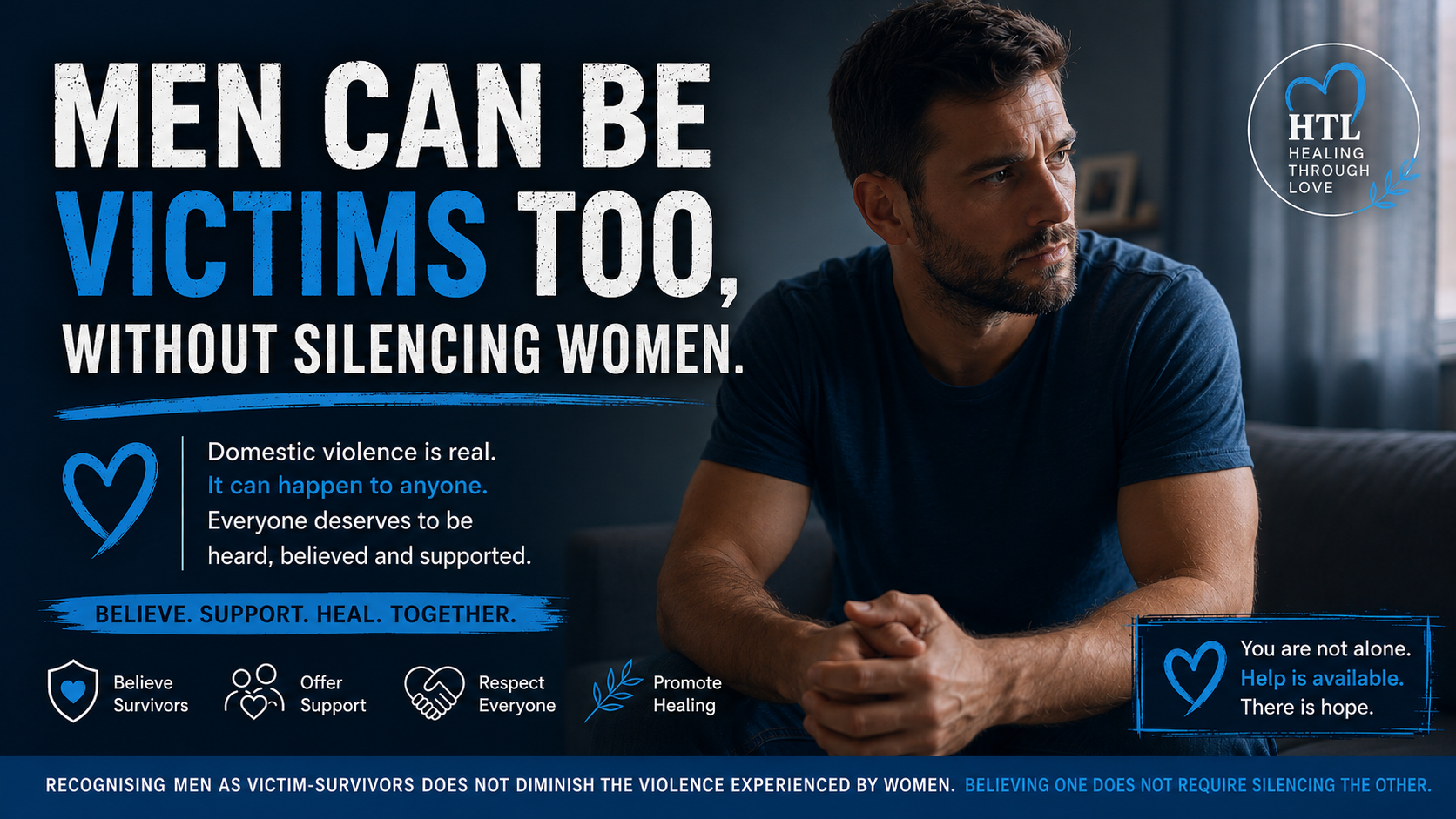
Domestic and family violence against men is real. It can be physical, sexual, emotional, financial or technology-facilitated. It can involve coercive control, isolation, humiliation, threats involving children, monitoring and the deliberate erosion of confidence and independence.
Acknowledging this does not require us to deny that domestic violence is gendered. Women experience partner violence and abuse at higher rates and are disproportionately affected by severe, repeated and lethal violence. Both truths can exist at the same time.
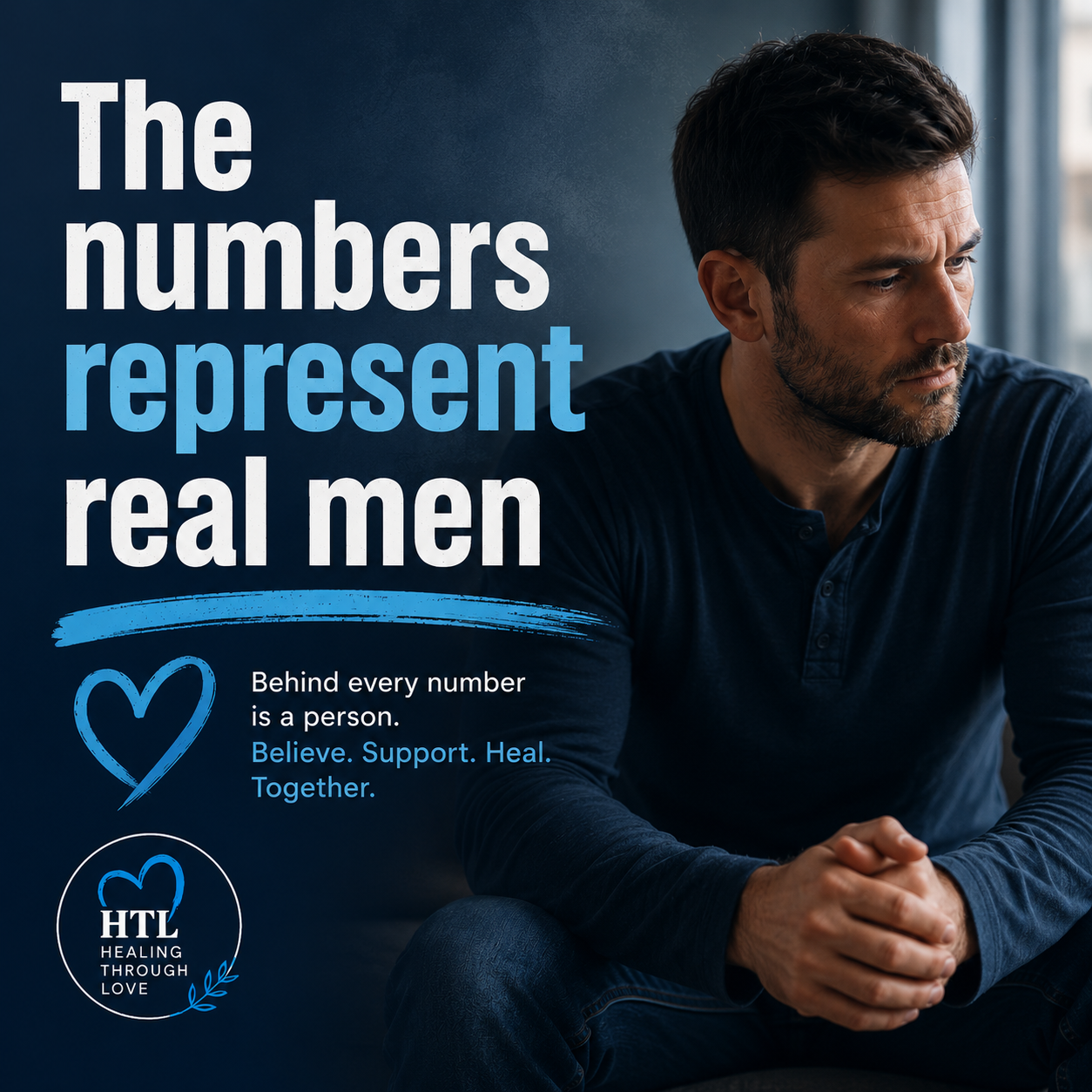
The Australian Bureau of Statistics estimates that 15 per cent of Australian men, approximately 1.5 million people, have experienced violence, emotional abuse or economic abuse by a cohabiting partner since the age of 15.
This includes 526,600 men who experienced physical or sexual partner violence, 1.3 million who experienced emotional abuse and 745,000 who experienced economic abuse. These categories overlap and must not be added together. Approximately 498,000 men reported partner violence by a female partner.
These figures are lower than those for women. They are not small.
Behind every number may be a man who was hit, threatened, monitored or financially controlled. There may be a man whose relationship with his children was used against him, or who was told nobody would believe him because he was bigger, stronger or male.
Abuse is not determined by physical size
One damaging myth is that a man cannot be a genuine victim because he should be able to defend himself.
Domestic violence is not a contest of physical strength. It is a pattern of behaviour used to frighten, dominate, isolate or control another person. A victim may be physically capable of responding but terrified of the consequences. He may fear being arrested, losing access to his children or being identified as the perpetrator.
He may also minimise what is happening. He may call it a difficult relationship or “just an argument.” He may believe admitting fear makes him weak.
Research on coercive control warns that looking only at individual incidents can hide the broader pattern. The important questions are not simply who shouted, pushed or called police on one occasion. We must also ask who is controlling whom, what has happened over time, what fear has been created and how each person’s freedom has been restricted.
It is often repeated, not isolated
Among men who experienced violence from a previous cohabiting partner, 52 per cent experienced more than one incident. Forty-two per cent experienced anxiety or fear for their safety, and 25 per cent said the violence did not begin until after the relationship ended.
Emotional abuse can become a sustained campaign. Of men who experienced emotional abuse from a previous partner, 96 per cent experienced more than one incident and 76 per cent experienced more than one abusive behaviour. Forty-five per cent experienced anxiety or fear because of it.
Leaving does not always end the control. Abuse may continue through stalking, financial sabotage, legal processes or threats connected to children.
Children may also be affected. Among men who experienced violence while living with a previous partner and had children in their care, 48 per cent said the children had seen or heard it.
When we dismiss a male victim, we may also overlook children living inside that pattern of fear.
The belief that men never tell anyone is not accurate.
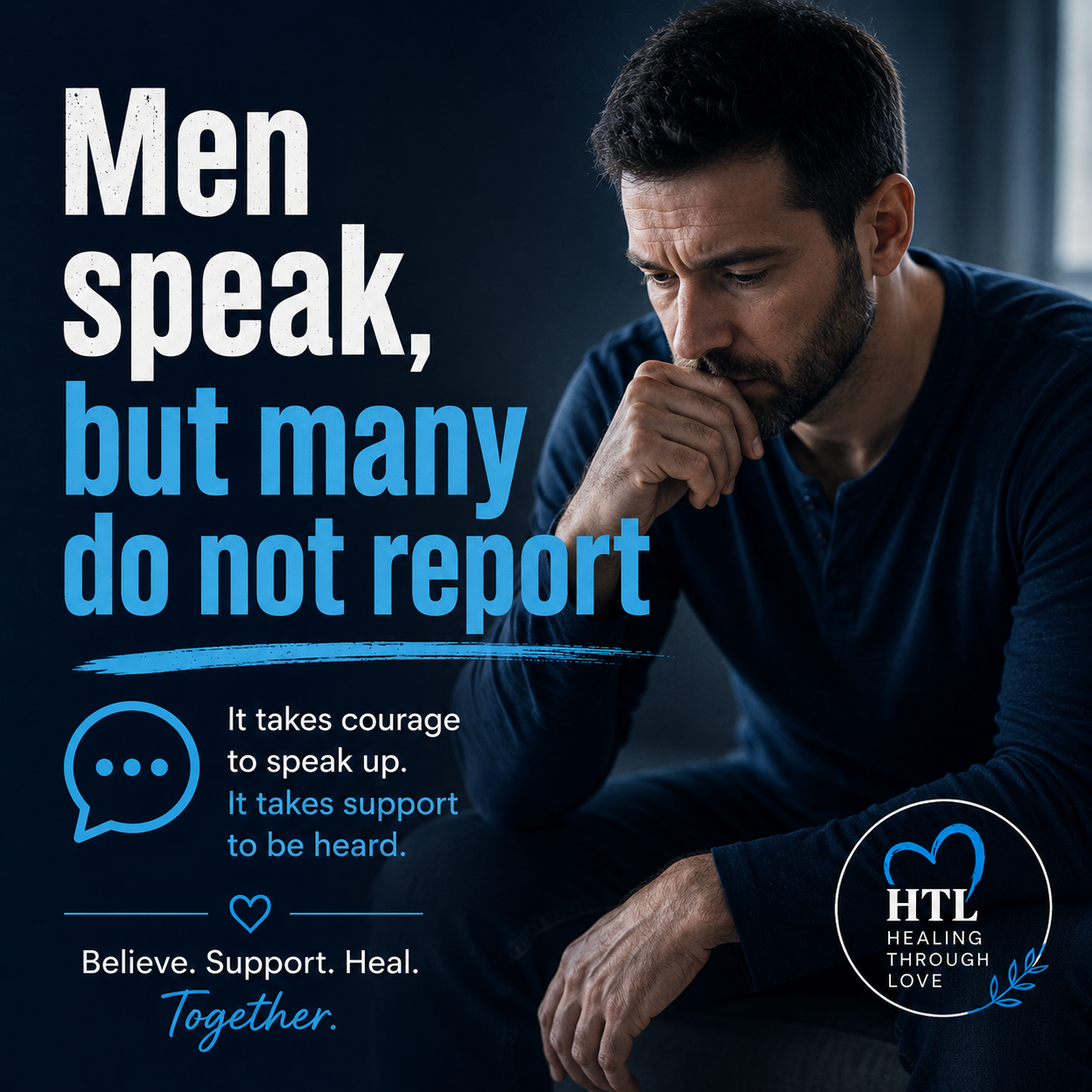
Of the men who experienced violence from a previous partner, 86 per cent had told someone and 64 per cent had sought advice or support. Yet 73 per cent had never told police.
A man may disclose to a friend, relative, counsellor or doctor while still feeling unable to approach police or a specialist service.
Some fear ridicule or disbelief. Others do not recognise non-physical control as domestic violence. Gay, bisexual and transgender men may face additional barriers, including discrimination, being outed or having their identity used against them.
The answer is not to accept every allegation without assessment. It is to ensure every disclosure is heard seriously, safely and without gender-based ridicule.
Recognising men must not erase women
There is a difference between advocating for male victim-survivors and using them to silence women.
When a woman’s murder, assault or experience of coercive control is being discussed, replying “women abuse men too” rarely helps male victims. It turns their pain into a debating device and disrupts a focused conversation about the risks women face.
Likewise, saying that women experience higher rates of domestic violence should never become permission to dismiss a man asking for help.
We do not need to pretend domestic violence affects everyone identically. Gender, physical strength, financial power, disability, sexuality, culture and access to services can shape how abuse is perpetrated and experienced.
We can acknowledge the gendered reality of violence against women while building responses that recognise men as possible victim-survivors. Compassion is not a limited resource. Safety is not something one group must lose so another can receive it.
What a better response sounds like
When a man discloses abuse, he does not need to hear:
“You are bigger than her.”
“What did you do to make her react?”
“Why didn’t you just leave?”
These are forms of victim-blaming. They echo harmful assumptions used against women.
A better response begins with: “You do not deserve to be hurt or controlled. Let us look at what will help you become safer.”
Professionals must assess the complete pattern, including coercive control, fear, injuries, threats, financial abuse, child-related abuse, resistance and self-defence. Gender should inform risk assessment, but it should not replace it.
Changing the conversation under Healing Through Love
Healing Through Love will continue to speak clearly about violence against women and the gendered patterns that place women at disproportionate risk.
We will also make space for men who have experienced domestic and family violence.
We will not raise male victims only beneath women’s stories. We will give them dedicated articles, accurate information and respectful conversations. We will challenge the belief that victimhood has one appearance and encourage systems to respond to evidence, context and patterns rather than stereotypes.
Most importantly, we will not ask survivors to compete for compassion.
Male victim-survivors are not a rebuttal. They are people. They deserve safety, dignity, appropriate support and the freedom to tell the truth about what happened to them.
Believing men does not require silencing women.
Believing women does not require abandoning men.
There is room beneath the Healing Through Love banner for every genuine victim-survivor who needs to be seen, heard and supported.
If you or someone you know is in immediate danger, call Triple Zero on 000. 1800RESPECT supports people of all genders affected by domestic, family and sexual violence and is available free, 24 hours a day, 7 days a week on 1800 737 732 or by text on 0458 737 732.
#DomesticViolenceAgainstMen, #MaleSurvivors, #MenCanBeVictimsToo, #DomesticViolenceAwareness, #FamilyViolence, #CoerciveControl, #EmotionalAbuse, #EconomicAbuse, #VictimSurvivors, #EndVictimBlaming, #SurvivorSupport, #HealingThroughLove