
Content note: This article discusses domestic and family violence and its effects on children.
When people speak about domestic and family violence, children are often described as witnesses. The word suggests they stood nearby and saw something happen between adults.
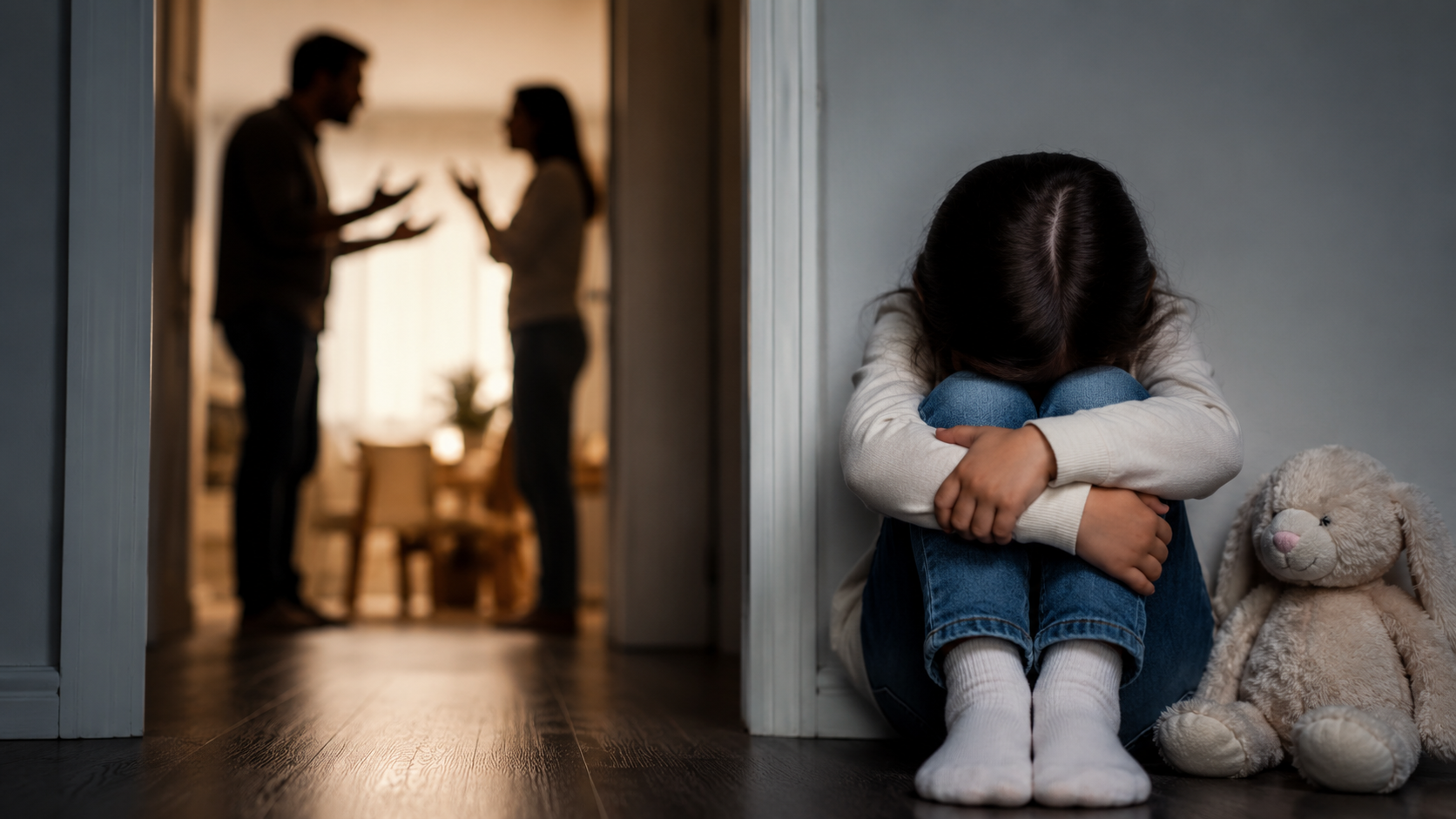
But children do not simply witness violence. They live inside it.
They hear the change in a voice before an argument begins. They recognise footsteps, slammed doors and long silences. They may see injuries, broken belongings or a parent being humiliated and controlled. Some hide with younger siblings, call the police, carry messages between parents or try to calm the person causing harm. Others learn to become quiet and almost invisible.
Even when violence is not directed physically at them, children can experience fear, coercion, instability and loss. Australian research and policy increasingly recognise children as victim-survivors in their own right, with their own memories, safety risks and recovery needs.
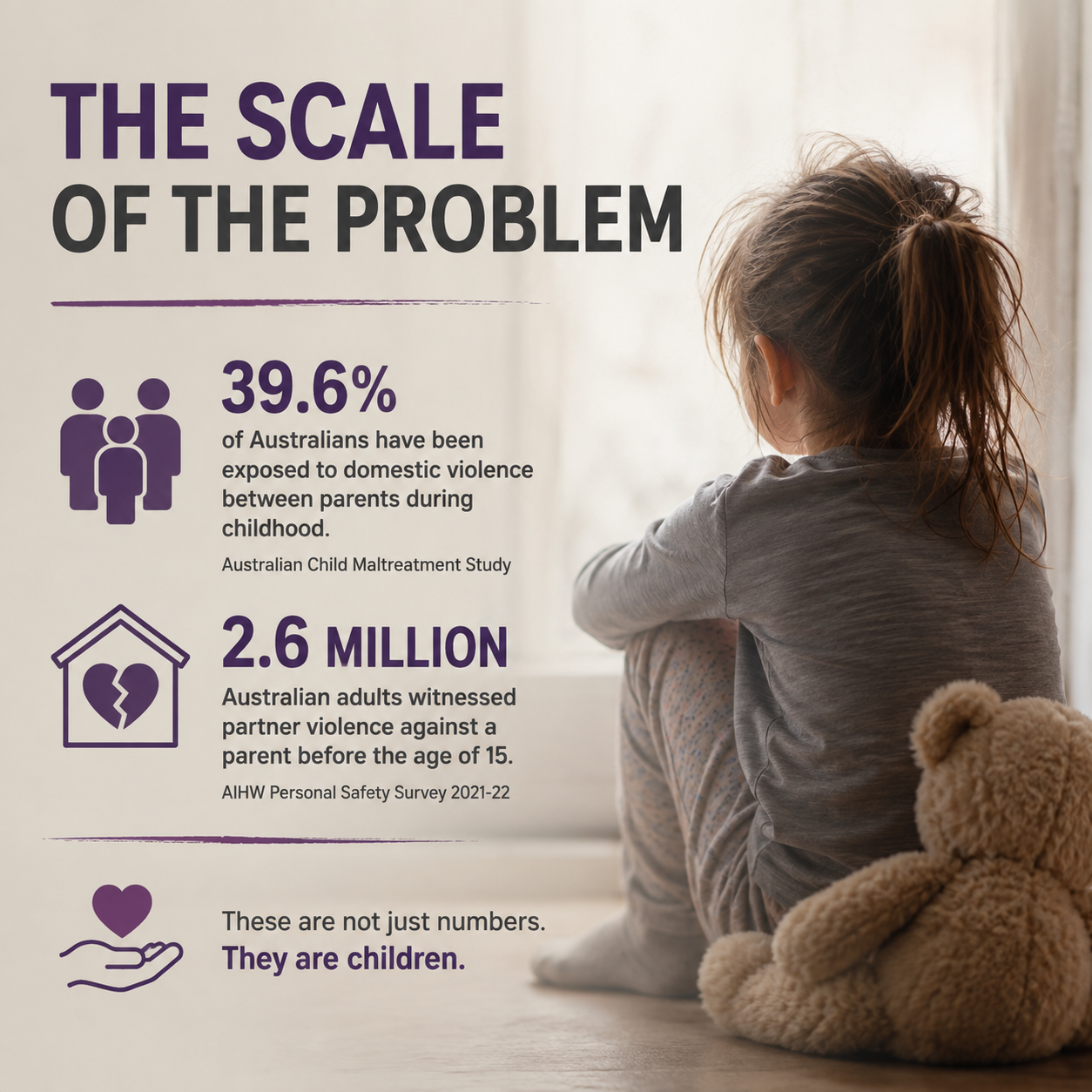
The Australian Child Maltreatment Study found that 39.6 per cent of participants had been exposed to domestic violence between parents during childhood. The Australian Institute of Health and Welfare also reports that, in the 2021-22 Personal Safety Survey, about 2.6 million Australian adults said they had witnessed partner violence against a parent before turning 15.
These studies use different definitions and research methods, but both reveal something important: growing up around domestic and family violence is not rare.
A Childhood Shaped by Vigilance
Home should be where a child can rest. In a violent or controlling household, home may become the place where they are most alert.
Children can learn to monitor facial expressions, tone of voice, household tension and the location of every family member. Their bodies may remain prepared for danger even during calm periods.
This distress can appear as anxiety, nightmares, aggression, withdrawal, separation anxiety, bedwetting, headaches, stomach pain or difficulty concentrating. Younger children may not have the language to explain their fear, so they communicate it through behaviour, play or physical symptoms.
A child who appears angry may be frightened. A child who seems distracted may be listening for danger. A child who is unusually mature may have taken on responsibilities no child should have to carry.
The effects can follow children into school. Some struggle to concentrate after a frightening night. Others miss classes because the family has moved or must attend police, court, medical and support appointments. They may avoid friendships because they cannot invite anyone home or are afraid of revealing what is happening.
Research has connected childhood exposure to domestic and family violence with effects on behaviour, education, cognitive development, physical health, emotional wellbeing and social development. Children living with domestic violence may also experience other forms of abuse, including physical, sexual and emotional abuse or neglect.
The mental health consequences can be significant. Western Australian research using linked police and health records found that children known to have experienced domestic and family violence were almost five times more likely to use a mental health service by age 18 than children with no known exposure.
The research also identified an average delay of about six years between authorities becoming aware of the violence and the child receiving mental health support.
Six years is a long time in a child’s development.
Leaving an abusive home can save lives, but departure does not instantly restore safety.
A child may lose their bedroom, pets, school, friends and familiar routines. The family may move repeatedly or face financial hardship and homelessness.
In 2024-25, children aged 0 to 14 made up nearly one-third of specialist homelessness service clients who had experienced family and domestic violence. Family and domestic violence also remains a major reason women and children leave their homes in Australia.
Violence can continue after separation. A perpetrator may use parenting arrangements, money, threats, technology or court processes to maintain control. Children may be questioned about the safe parent, used to deliver messages or pressured to keep secrets. They may be told the protective parent caused the separation or destroyed the family.
This can damage one of the child’s most important sources of recovery: their relationship with the parent who is trying to keep them safe.
We must not blame that parent for failing to protect. Many protective parents are making constant safety decisions while living under intimidation, financial control, surveillance and threats. Supporting them with secure housing, legal assistance, financial stability and trauma-informed services also supports their children.
What Children Need After the Chaos
The first need is physical safety, but recovery requires more than the absence of an immediate incident.
Children need adults who listen without interrogating them. They need to be believed without being forced to disclose more than they are ready to share. They need clear messages that the violence was not their fault and that stopping it was never their responsibility.
A child can love a parent and still fear them. They can miss the family they wanted while feeling relieved that the household has changed. They can be angry with the safe parent or protective of the person who caused harm. Recovery must make room for those contradictions.
Child-specific safety planning is essential. Depending on the child’s age, this may include identifying safe places, trusted adults, emergency contacts, school collection arrangements, technology risks and a family safety word.
Children should know how to seek help, but they should never be made responsible for physically intervening or protecting an adult.
Predictability helps rebuild a sense of safety. Regular meals, bedtime routines, school attendance, familiar belongings and adults who keep their promises can gradually teach the nervous system that every quiet moment will not end in danger.
Support should suit the individual child. Younger children may benefit from play-based or child-parent therapy. Older children may need individual counselling, peer support, creative therapies or help with grief, identity and relationships.
Australian research into child-parent psychotherapy has explored how strengthening the relationship between preschool-aged children and their mothers can support recovery after family violence.
Children with disability and children from diverse cultural and community backgrounds need accessible, culturally safe responses that recognise their particular experiences and barriers.
Schools also have an important role. A trusted staff member, flexible expectations, confidential safety procedures and learning support can make school a stable place when the rest of life feels uncertain.
Most importantly, children need services that communicate with one another. Families should not be forced to repeatedly explain their trauma to police, housing providers, counsellors, schools, child protection services and courts while each service sees only one part of the situation.
Current ANROWS guidance calls for evidence-informed, child-centred responses that recognise children’s individual safety needs rather than treating them merely as an extension of the adult victim-survivor.
Children Are Not Destined to Repeat the Violence
Exposure to domestic and family violence can increase the risk of later emotional, behavioural and relationship difficulties. It does not mean every child will become a perpetrator or experience violence as an adult.
Risk is not destiny.
A safe and dependable adult can be deeply protective. So can stable housing, supportive teachers, community connection, timely counselling and opportunities for the child to regain choice and confidence.
Children are not broken versions of the adults they might become. They are people responding to circumstances created by adults.
Their behaviour should not simply be labelled difficult, defiant or disruptive without asking what may have happened to them and what they are trying to communicate.
Too often, systems focus on whether the protective parent left quickly enough, reported often enough or made every decision perfectly.
A child-centred response asks different questions.
How did the person using violence create fear in the home?
How did their choices affect the child’s education, housing, health and relationships?
How did they undermine the safe parent’s ability to care for the children?
Are they continuing the abuse through parenting arrangements, financial control or legal systems?
Responsibility belongs with the person choosing violence.
Australia’s National Plan to End Violence against Women and Children 2022-2032 recognises children and young people as victim-survivors in their own right. The Plan covers prevention, early intervention, response, recovery and healing.
That recognition matters, but it must be reflected in practice through timely, coordinated and long-term support.
Children should not have to wait until their distress becomes a crisis before someone helps them.
They need safety that lasts, adults who follow through and services that understand the end of a violent relationship may be only the beginning of recovery.
Most of all, they need the freedom to stop monitoring the adults around them and return to the work of childhood: learning, playing, growing, trusting and discovering who they are.
Children do not just witness domestic and family violence.
They experience it. They survive it. And they deserve support that sees them, hears them and helps them heal.
#ChildrenAndDomesticViolence, #FamilyViolence, #ChildhoodTrauma, #ChildVictimSurvivors, #TraumaInformedCare, #ChildSafety, #DomesticViolenceAwareness, #HealingThroughLove