
Domestic Violence Prevention Is Everyone’s Responsibility
Real change begins when we recognise abuse, listen to survivors and refuse to remain silent about the attitudes and systems that allow violence to continue. Learn How to HelpFind Support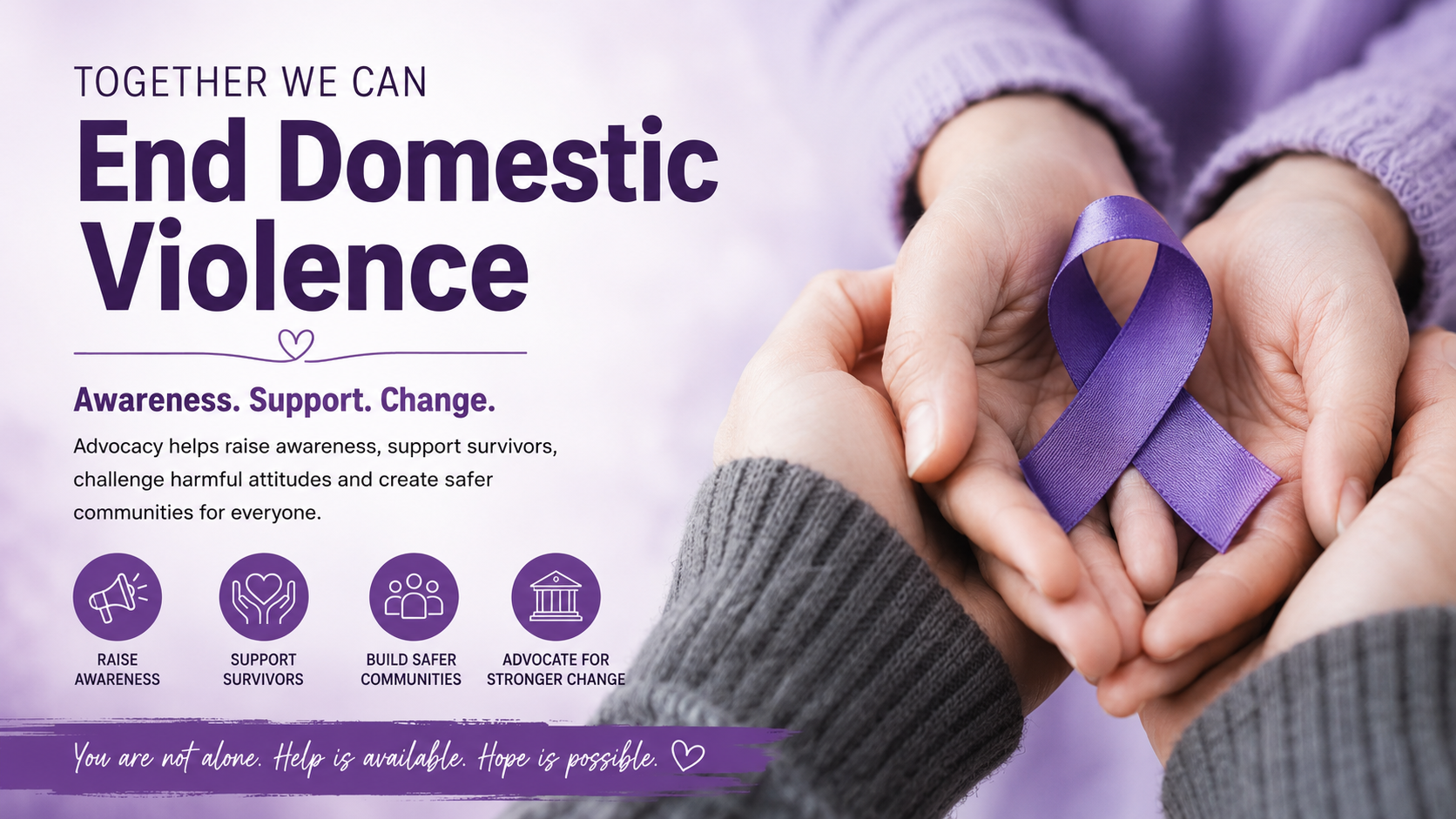
Awareness Must Lead to Action
Domestic and family violence does not only affect the person directly experiencing it. Its impact can reach children, families, workplaces, friendships and entire communities.
For too long, domestic violence has been treated as something private. Survivors have been expected to carry the fear, shame and consequences while the behaviour of the person causing harm has remained hidden, minimised or excused.
Advocacy helps bring that harm into the open.
It challenges the belief that abuse should remain behind closed doors. It creates opportunities for people to recognise warning signs, find support and understand that violence is never the survivor’s fault.
But awareness alone is not enough.
Domestic violence prevention requires communities, organisations, workplaces and governments to turn awareness into meaningful action. It means listening to survivors, funding specialist services, challenging victim-blaming and creating systems that respond before a situation becomes a tragedy.
Why Domestic Violence Advocacy Matters
Domestic violence advocacy is not about speaking over survivors or deciding what they should do. It is about helping create the conditions in which survivors can be heard, believed, supported and given genuine choices.
Advocacy can help change both individual lives and the wider systems surrounding domestic and family violence.
Bringing Abuse Out of the Shadows
Abuse thrives in silence, secrecy and confusion. Honest conversations help people understand that domestic violence can include emotional abuse, coercive control, financial abuse, sexual violence, intimidation, stalking, isolation and technology-facilitated abuse, as well as physical violence.
Helping Survivors Feel Believed
Many survivors have been told that they are exaggerating, imagining the abuse or somehow responsible for it. Survivor-centred advocacy makes it clear that the responsibility belongs to the person choosing to use violence, control or intimidation.
Improving Access to Support
Advocacy can identify the practical barriers survivors face when seeking help, including housing insecurity, financial dependence, fear of retaliation, concern for children or pets, isolation, disability and limited access to specialist services.
Creating Long-Term Change
Public advocacy can influence funding, workplace policies, prevention education, legal protections and government responses. It can help move domestic violence from the margins of public discussion to where it belongs: at the centre of community safety.
Advocacy Begins With Listening
Survivors are the experts in their own lives.
They understand their circumstances, the risks they face and the possible consequences of every decision. What appears to be a simple solution from the outside may be dangerous, financially impossible or emotionally overwhelming for the person experiencing the abuse.
Telling someone to “just leave” overlooks the complexity of domestic violence.
Leaving can require careful planning, money, safe housing, legal advice, transport, access to documents and confidence that children, pets and loved ones will also be protected.
Support should expand a survivor’s choices rather than take control away from them again.
What Support Can Sound Like
I believe you.
This is not your fault.
You do not deserve to be treated this way.
You do not have to make every decision today.
What would help you feel safer?
How can I support you without placing you at greater risk?
These simple statements can help restore something abuse often takes away: the right to be heard, respected and trusted.
Seven Ways You Can Advocate for Change
You do not need a large organisation, a public platform or specialist qualifications to contribute to domestic violence prevention.
Advocacy can begin through the conversations you have, the information you share and the behaviour you are willing to challenge.
1. Learn About the Many Forms of Abuse
Domestic violence is not limited to physical assault.
Learn about coercive control, emotional manipulation, financial abuse, sexual violence, isolation, threats, stalking and technology-facilitated abuse.
Understanding the broader patterns of power and control can help you recognise situations that might otherwise be dismissed as relationship conflict or controlling behaviour.
Seek information from specialist domestic and family violence organisations rather than expecting survivors to educate you through their personal experiences.
2. Challenge Victim-Blaming
Victim-blaming places attention on the survivor’s actions instead of the behaviour of the person causing harm.
Questions such as “Why didn’t they leave?” or “Why did they go back?” can make survivors feel judged and misunderstood.
More useful questions include:
Why did the person causing harm believe they had the right to control someone?
What prevented the survivor from accessing safety?
Were appropriate services available?
Did the systems surrounding them respond effectively?
Changing the questions changes where responsibility is placed.
3. Share Support Information Responsibly
Sharing accurate support information can help someone discover options they did not know were available.
Include national and local services in relevant articles, social media posts, community newsletters and workplace resources.
Be mindful that a survivor’s phone, computer or social media activity may be monitored. Avoid publicly tagging someone in domestic violence content or sending information that could place them at greater risk.
Where appropriate, remind people that they may need to use a safer device when looking for help.
4. Support Survivor-Led Voices and Initiatives
Survivor stories can challenge myths, reveal gaps in existing systems and help others feel less alone.
However, no survivor owes the public their story.
Stories should only be shared with clear and informed consent. Survivors must retain control over what is disclosed, where it appears and whether their name or identity is used.
Supporting survivor-led advocacy also means recognising lived experience as expertise. Invite survivors into conversations about policy, prevention and service design, rather than discussing their lives without them.
5. Help Create Safer Workplaces and Communities
Domestic violence does not stop when someone arrives at work or attends a community activity.
Workplaces and organisations can help by creating clear family and domestic violence policies, providing confidential pathways to support, training appropriate staff and responding compassionately when someone discloses abuse.
Community groups, schools, sporting clubs and service organisations can also examine how they respond to concerning behaviour.
A policy is only useful when people know it exists and trust that they will be treated with dignity when they use it.
6. Advocate for Stronger Systems
Individual support matters, but survivors should not have to rely solely on personal goodwill.
Domestic violence prevention requires properly funded specialist services, safe and affordable housing, accessible legal assistance, trauma-informed healthcare, culturally appropriate support and effective responses from police and courts.
Advocacy can include contacting elected representatives, supporting community campaigns, attending public consultations and asking governments how prevention commitments are being funded and measured.
Accountability means looking beyond promises and examining whether survivors can access meaningful help when they need it.
7. Practise Safe Bystander Action
There may be times when you witness controlling, threatening or abusive behaviour.
Bystander action does not always mean directly confronting the person causing harm. Confrontation can sometimes increase the danger for the survivor or the person intervening.
Depending on the circumstances, safe action may include:
Checking in privately with the person you are concerned about.
Naming a harmful comment or attitude when it is safe to do so.
Offering practical support without pressure.
Contacting emergency services when someone is in immediate danger.
Seeking advice from a specialist domestic violence service.
The goal is not to become a rescuer. It is to respond in a way that prioritises safety, dignity and the survivor’s choices.
Prevention Is More Than an Awareness Campaign
Domestic violence prevention cannot be limited to a yearly campaign, a social media graphic or a statement released after another death.
Prevention means addressing the beliefs and behaviours that allow abuse to begin and continue.
It includes teaching children and young people about respect, consent, personal boundaries and healthy relationships.
It means challenging attitudes that excuse jealousy, possessiveness, intimidation or control as signs of love.
It means helping people identify concerning behaviour early, before it escalates into serious harm.
Prevention also requires us to recognise how inequality, social isolation, financial insecurity, disability, discrimination and limited access to services can increase vulnerability or make it harder for someone to seek help.
Most importantly, prevention requires accountability.
The responsibility to stop abuse belongs to the person using abusive behaviour. Communities and systems must stop placing the burden of prevention entirely on the people at risk of being harmed.
Using Social Media Without Exploiting Survivors
Social media can be a powerful advocacy tool. It can help challenge misinformation, share support services and bring domestic violence into public conversation.
It can also reduce deeply personal experiences to shocking headlines, graphic details or content created primarily for engagement.
Before sharing a survivor’s story, image or words, ask:
Has the survivor given clear permission?
Do they understand where and how the content will be used?
Could this information identify or endanger them?
Does the content preserve their dignity?
Is the story being shared to create understanding, or simply to provoke a reaction?
Survivor stories should never be treated as public property.
Ethical storytelling allows people to retain ownership of their experiences. It avoids unnecessary details, sensational language and pressure to disclose more than the survivor wishes to share.
Frequently Asked Questions
What is domestic violence advocacy?
Domestic violence advocacy involves raising awareness, supporting survivors, challenging harmful attitudes and working to improve the systems that respond to domestic and family violence. It can happen through community education, survivor support, workplace action, storytelling, campaigning and policy reform.
How can I support someone experiencing domestic violence?
Listen without judgement, believe what they tell you and avoid pressuring them to leave or make an immediate decision. Ask what support would be useful, respect their choices and help them connect with specialist services when they are ready. Call emergency services if someone is in immediate danger.
Why might a survivor stay or return to an abusive relationship?
A survivor may face financial dependence, housing insecurity, threats, concern for children or pets, isolation, disability, emotional attachment, fear of retaliation or a lack of safe alternatives. Returning does not mean the abuse was acceptable or that the survivor does not want help.
Can people advocate without sharing survivor stories?
Yes. Advocacy can focus on warning signs, harmful attitudes, support services, policy reform, respectful relationships, prevention education and community responsibility. A survivor’s private experience should never be treated as necessary content for an awareness campaign.
What can organisations do to support domestic violence prevention?
Organisations can develop family and domestic violence policies, provide confidential support pathways, train staff, offer appropriate leave and flexibility, display support information and build partnerships with specialist services. They can also challenge disrespectful behaviour before it becomes normalised.
How Healing Through Love Is Creating Change
Healing Through Love began with a desire to remind survivors that they are seen, valued and worthy of care.
That commitment now extends beyond individual events.
Our advocacy work raises awareness of domestic and family violence, challenges the silence surrounding abuse and supports conversations that place the safety and dignity of survivors first.
Through educational articles, community partnerships, survivor-centred storytelling and awareness initiatives, we work to help people understand the realities of abuse and their role in creating change.
Our local and global pamper days remain an important expression of care and connection. They offer moments in which survivors can receive kindness without judgement, pressure or expectation.
Advocacy and care are not separate.
Care reminds survivors that they matter.
Advocacy works to change the conditions that caused the harm.
Together, they help build communities in which survivors are not only supported after violence, but protected through stronger awareness, earlier intervention and meaningful prevention.
You Do Not Need a Public Platform to Make a Difference
You can make a difference by believing a survivor, challenging a harmful comment, sharing reliable support information, supporting a specialist organisation or asking decision-makers what they are doing to prevent domestic violence.
Every informed conversation helps weaken the silence in which abuse thrives.
Every survivor who is treated with dignity is reminded that they are not alone.
Every community that chooses action over avoidance moves us closer to a future where safety is treated as a right, not a privilege.
Need Support Now?
If you or someone else is in immediate danger in Australia, call Triple Zero on 000.
For confidential domestic, family and sexual violence counselling, information and support, contact 1800RESPECT:
Call: 1800 737 732
Text: 0458 737 732
Online chat and video call services are also available through the 1800RESPECT website.
Support is available 24 hours a day, seven days a week.
Consider using a safer phone, computer or device if you are concerned that your technology or online activity may be monitored.
Domestic violence is not a private problem for survivors to solve alone.
It is a community issue, a public safety issue and a responsibility shared across every level of society.
When we listen, believe, educate, challenge and act, we help create a world in which survivors are supported and abuse is no longer ignored, excused or hidden.
Together, we can raise awareness.
Together, we can stand with survivors.
Together, we can help prevent violence before another life is changed forever.
#DomesticViolencePrevention #SupportSurvivors #EndDomesticViolence #FamilyViolenceAwareness #DomesticViolenceAdvocacy #SurvivorSupport #BreakTheCycle #SaferCommunities #HealingThroughLove #StandWithSurvivors