
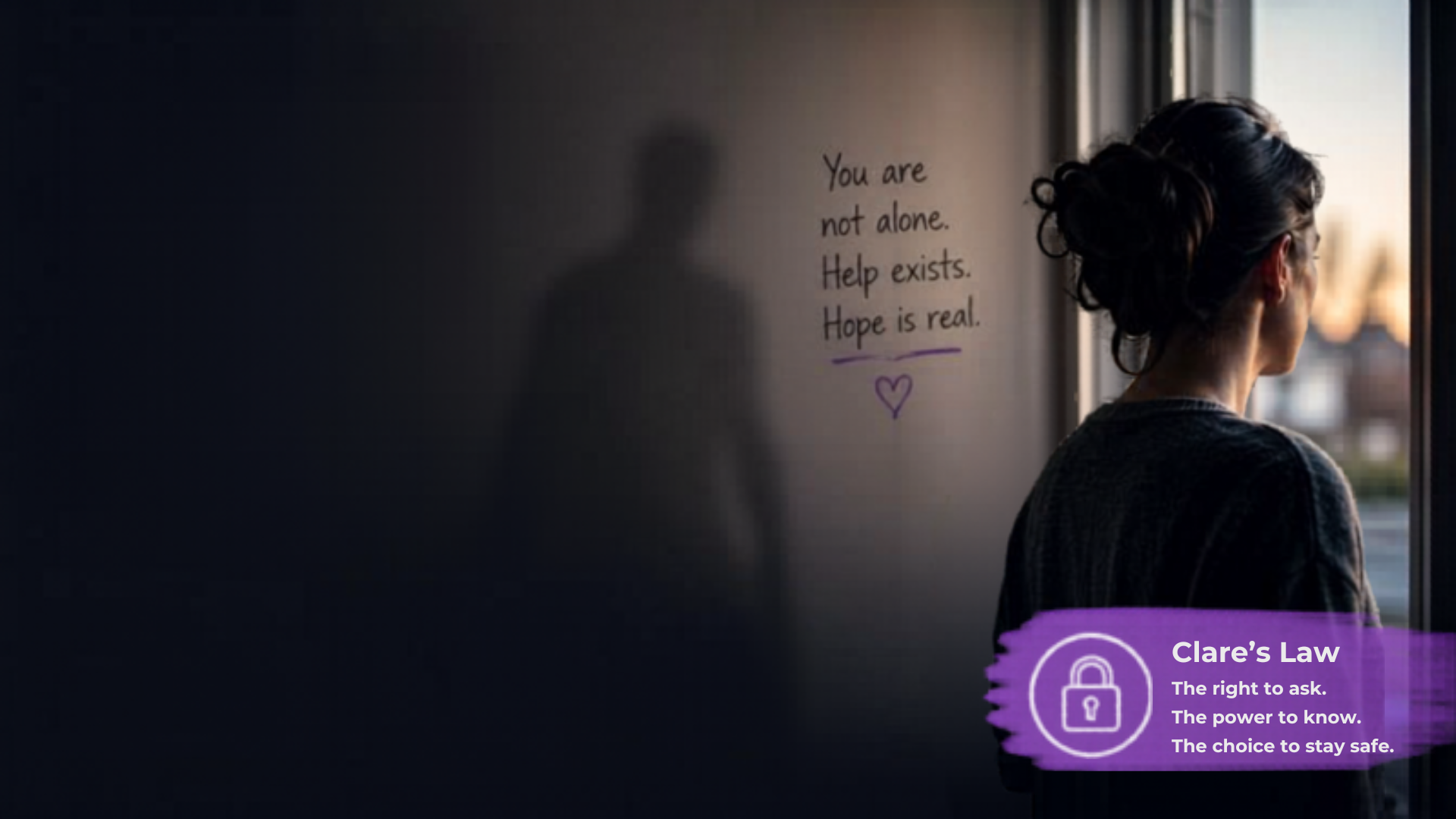
We talk about domestic violence more than we used to.
There are campaigns.
There are statistics.
There are awareness days.
And yet, the reality hasn’t shifted enough.
For many people living in it, domestic violence is still invisible, misunderstood, or dismissed entirely.
That’s where advocacy needs to evolve.
Because awareness is not the same as understanding.
And understanding is not the same as action.
And action, without prevention, is too late.
The Problem With “Awareness”
Awareness often sits at the surface.
It tells us that domestic violence exists.
It might even tell us how common it is.
But it rarely shows us what it feels like to live inside it.
It doesn’t explain:
- Why someone stays
- How control actually works
- What fear does to decision-making
- How identity is slowly eroded over time
Without that depth, people fill in the gaps with assumptions.
“They could just leave.”
“It can’t be that bad.”
“Why didn’t they say something sooner?”
These are not questions rooted in understanding.
They are signs that awareness hasn’t gone far enough.
Why Prevention Has to Be Part of the Conversation
Most advocacy begins after harm has already happened.
But what if we placed equal weight on preventing it in the first place?
Prevention is not a single strategy.
It’s a shift in how we think, respond, and equip people before risk escalates.
It looks like:
- Educating people on early signs of coercive control
- Normalising conversations about safety in relationships
- Creating pathways to ask questions before committing to someone
- Supporting people to trust what feels “off,” even when it’s subtle
Prevention gives people information earlier.
And earlier information can change decisions.
The Role of Disclosure: Why Clare’s Law Matters
One of the most practical prevention tools we have is the Domestic Violence Disclosure Scheme, often referred to as Clare’s Law.
It allows individuals to request information about a partner’s history of violence or abusive behaviour.
This matters more than most people realise.
Because one of the hardest parts of domestic violence is not recognising it early.
Abuse often doesn’t start with obvious harm.
It builds. Gradually. Quietly.
By the time it is visible, the person is often already deeply entangled.
Clare’s Law introduces something powerful into that dynamic:
informed choice.
It gives people the ability to:
- Ask questions before fully committing
- Identify patterns that might otherwise stay hidden
- Make decisions with more context, not less
It doesn’t remove all risk.
But it reduces the unknown.
And in this space, reducing the unknown can save lives.
What Real Advocacy Requires
Real advocacy goes deeper than information.
It requires a shift in how we listen, respond, and support.
It looks like:
Listening without judgment
Not trying to fix. Not trying to rush someone out of their situation.
Just hearing what is being said, and what isn’t.
Understanding coercive control
Domestic violence is not always physical.
It is often psychological, emotional, financial, and deeply strategic.
Control can look quiet. Subtle. Even “normal” from the outside.
Removing pressure from survivors
Telling someone to leave before they are ready can create more risk, not less.
Safety is not just about leaving.
It’s about timing, support, and stability.
Creating safe spaces to speak
Not everyone is ready to tell their story publicly.
Some people may never want to.
Advocacy must respect that.
Choice is part of safety.
Why Lived Experience Still Matters
Policies and prevention tools matter.
But lived experience brings something they cannot.
It brings truth.
Not polished.
Not simplified.
But real.
It shows the complexity behind the statistics.
It challenges assumptions.
It builds empathy.
And for someone who feels alone inside their situation,
it can be the moment they realise:
“I’m not the only one.”
Where We Need to Go Next
If we want to create real change, advocacy needs to move beyond visibility.
It needs to become:
- More informed
- More trauma-aware
- More prevention-focused
- More human
We need conversations that don’t just highlight the issue,
but help people understand the reality behind it.
We need systems that support people before, during, and after harm.
And we need to stop expecting survivors to carry the responsibility
of educating everyone else.
A Different Standard for Advocacy
Domestic violence advocacy is not about being the loudest voice in the room.
It’s about being the most responsible.
It’s about knowing when to speak,
when to listen,
and how to hold space without causing harm.
Because this is not a topic for performance.
It’s a space that requires care, clarity, and accountability.
And if we are serious about change,
prevention has to be part of the standard, not an afterthought.
If you care about this issue:
What role do you think prevention should play in domestic violence advocacy moving forward?
#DomesticViolenceAwareness, #DVPrevention, #ClaresLaw, #CoerciveControl, #EndDomesticViolence, #SurvivorSupport, #TraumaInformed, #ViolencePrevention, #SafeRelationships, #AdvocacyMatters